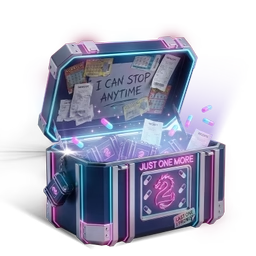
Few virtual items in gaming history have captured the public imagination quite like the weapon cases in Counter-Strike: Global Offensive (and its successor, Counter-Strike 2). What started as a simple cosmetic drop system in 2013 evolved into a multi-million-dollar virtual economy, complete with digital stock markets, high-stakes unboxings, and items selling for six-figure sums.
For the uninitiated, navigating the world of CS:GO cases can be overwhelming. This guide explores how cases work, the mathematics behind the odds, the dynamics of the Steam Community Market, and the essential rules of engagement for anyone looking to dip their toes into the unboxing phenomenon.
What Are CS:GO Cases?
CS:GO cases are virtual containers that hold weapon finishes (skins), knives, and gloves. When Valve introduced the “Arms Deal” update in August 2013, it fundamentally changed how players interacted with the game. Instead of just playing for rank, players could now earn randomized cosmetic items.
To open a case, a player needs two things:
- A Case: Earned as random drops after completing matches on official servers, received as weekly care packages, or purchased from marketplaces.
- A Key: Purchased exclusively from the in-game store for £2.50 GBP (or regional equivalent).
Once a key is used on a corresponding case, a roulette-style wheel spins through the possible contents before landing on a single item.
The Mathematics of Unboxing: Understanding the Odds
While the excitement of hitting a rare item keeps players opening cases, mathematics dictates that the house almost always wins. Valve officially discloses the drop rates for cases in regions where loot box transparency laws require it (such as China), and the probabilities are universally accepted across the global community.
CS:GO Case Drop Rarity Probabilities
| Rarity Category | Item Type | Approximate Drop Rate |
|---|---|---|
| Consumer Grade | Base / Common | N/A (Standard drops) |
| Mil-Spec Grade | Blue Skins | ~79.92% |
| Restricted | Purple Skins | ~15.98% |
| Classified | Pink Skins | ~3.20% |
| Covert | Red Skins / Knives | ~0.64% |
| Special Rare | Knives / Gloves | ~0.26% |
The StatTrak™ Multiplier
In addition to the base rarity, any weapon pulled from a case has a roughly 10% chance of being a “StatTrak™” variant. These items feature a physical counter attached to the weapon body that tracks confirmed kills made by the player using that specific skin. StatTrak items generally command a higher price on the open market due to their scarcity.
The Economics of the Case Market
The virtual economy surrounding CS:GO cases operates much like a real-world stock market, driven entirely by supply and demand.
Why Do Case Prices Vary?
- Active vs. Rare Drop Pools: Valve periodically rotates cases out of the active drop pool. When a case is moved to the rare drop pool (dropping at a fraction of a percent per match), its supply is effectively capped, causing its price to rise over time.
- Contained Skins: A case is only as valuable as the items inside it. Cases featuring iconic skins—such as the AWP | Asiimov or the AK-47 | Redline—tend to retain higher demand.
- The Appeal of Rare Knives: Certain cases contain coveted knife finishes, like the Butterfly Knife or Karambit, which drives up the cost of opening those specific containers.
Best Practices for Navigating CS:GO Cases
For players wanting to engage with the case system without draining their bank accounts, following a few strategic guidelines is essential.
- Treat Unboxing Like Entertainment, Not Investment: Expect to lose money when opening cases. If you view opening a case like buying a lottery ticket or a movie ticket—paying for the thrill of the gamble rather than an investment—you will have a much healthier experience.
- Buy Specific Skins Directly: If there is a particular weapon finish you want, the most cost-effective method is almost always buying it outright from the Steam Community Market or a reputable third-party trading site, rather than trying to unbox it.
- Monitor the Market: If you receive active-pool case drops, consider selling them immediately. Over time, many common cases flood the market, lowering their immediate cash-out value.
- Exercise Security Caution: The popularity of CS:GO skins makes players prime targets for phishing scams, fake trading bots, and malicious links. Never log into third-party sites using your primary Steam credentials unless you can thoroughly verify their legitimacy.
Frequently Asked Questions (FAQ)
Can I still open CS:GO cases in Counter-Strike 2?
Yes. Counter-Strike 2 is built on the same inventory system as CS:GO. All cases, keys, and skins carried over seamlessly to the new engine, and you can continue to open cases the exact same way.
Are CS:GO cases rigged?
The odds are fixed by programmed drop rates rather than manual manipulation. While the house edge heavily favors Valve, the system functions transparently according to the statistical probabilities listed earlier in this guide.
What is the most expensive item ever unboxed from a case?
While exact private transactions are often kept confidential, rare factory-new knife patterns—such as the Blue Gem Karambit or StatTrak Factory New Crimson Web items—have been valued in the tens of thousands of dollars.
Is it legal to gamble with CS:GO cases?
The legality of opening cases depends heavily on your jurisdiction. Some countries classify virtual loot boxes as a form of gambling and have banned or heavily regulated them, while others permit them as standard in-game microtransactions.
CS:GO cases occupy a fascinating intersection of gaming, probability, and economics. Whether you are a casual player who enjoys opening a case on the weekend or a dedicated market speculator tracking supply trends, understanding the mechanics behind the odds and the market helps ensure a smarter, safer experience. Just remember: behind every dazzling neon skin and spinning knife animation lies a strict mathematical reality—so open responsibly!
Explore CS2Skin for a thrilling CS2 Case experience, featuring detailed skin previews, odds insights, and tools for CS2 fans.